Florence, Italy
Dinner With Dante
“Only the dead have seen the end of war.” -George Santayana, 1922
An award-winning screenplay by Katherine Diane Schimmel.
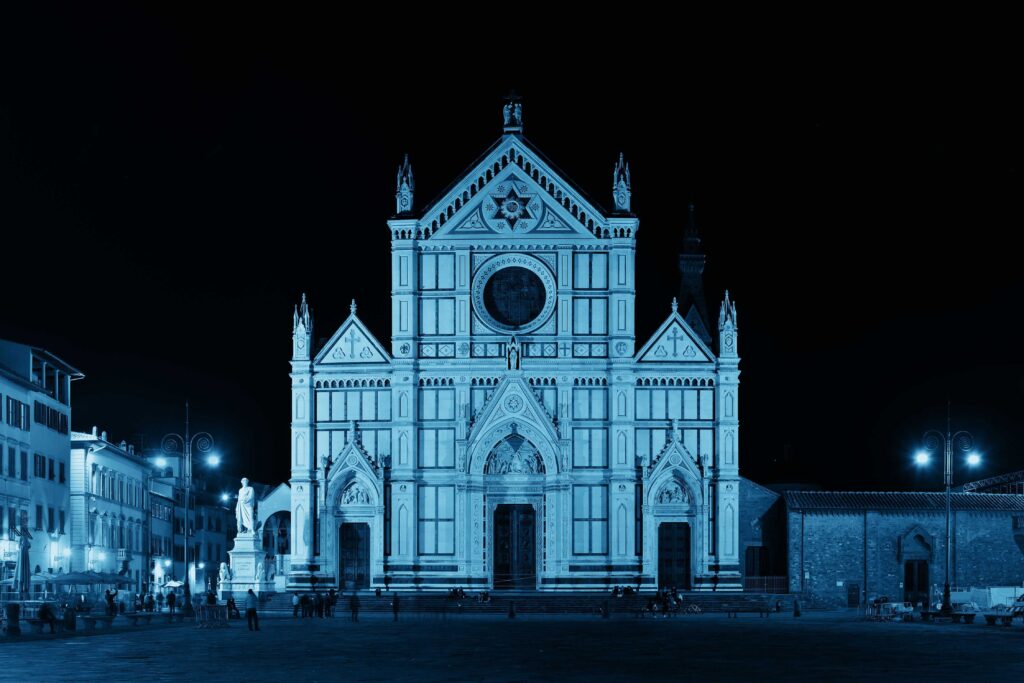
The monument to Dante before Santa Croce · Florence
The monument to Dante before Santa Croce · Florence
Dinner with Dante Wins the Prestigious KINÉO DIAMANTE AWARD for Best Short Film at The Venice Film Festival on Sept 5th, 2026.
The Story
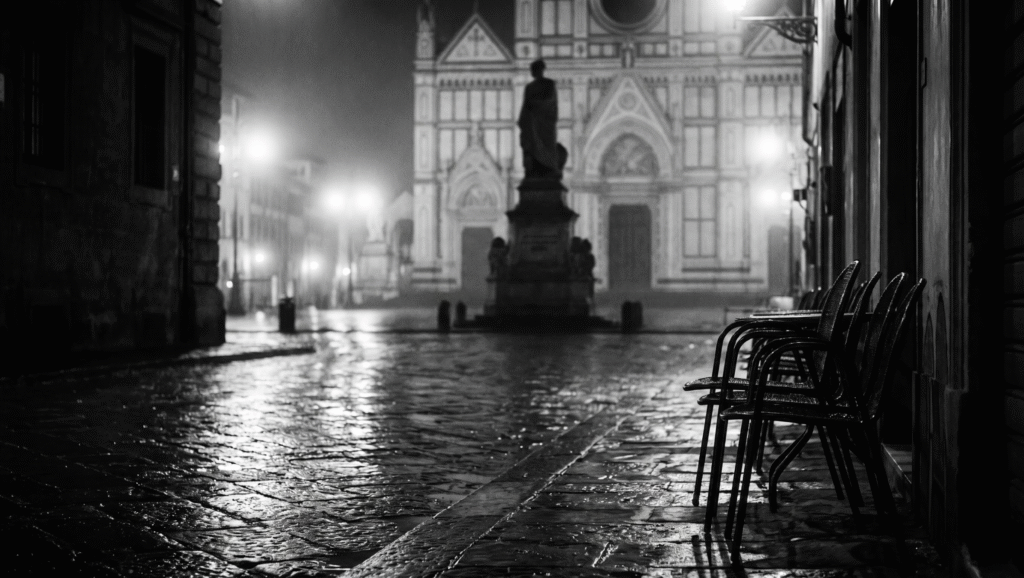
Florence. After the war. One woman returns to Dante, week after week.
Dinner with Dante follows a fictional young Italian
woman whose world has narrowed around memory, grief, and survival. In Piazza di Santa Croce, her imagined conversations with the monument become a private ritual: part confession, part companionship, part attempt to understand what war leaves behind. The film is quiet, literary, and intimate—less about battle than the lifelong quest to survive in a state of long-term grief, an alternate universe pitched against a lively piazza.
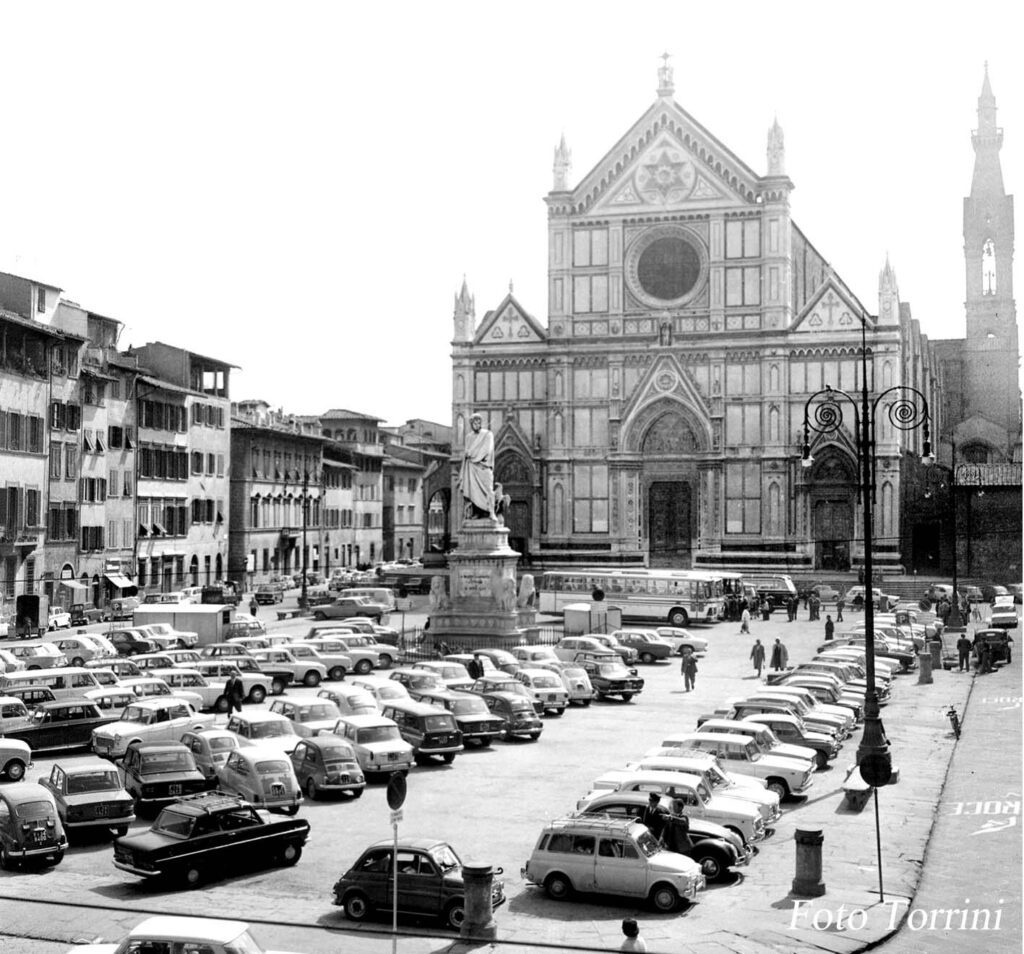
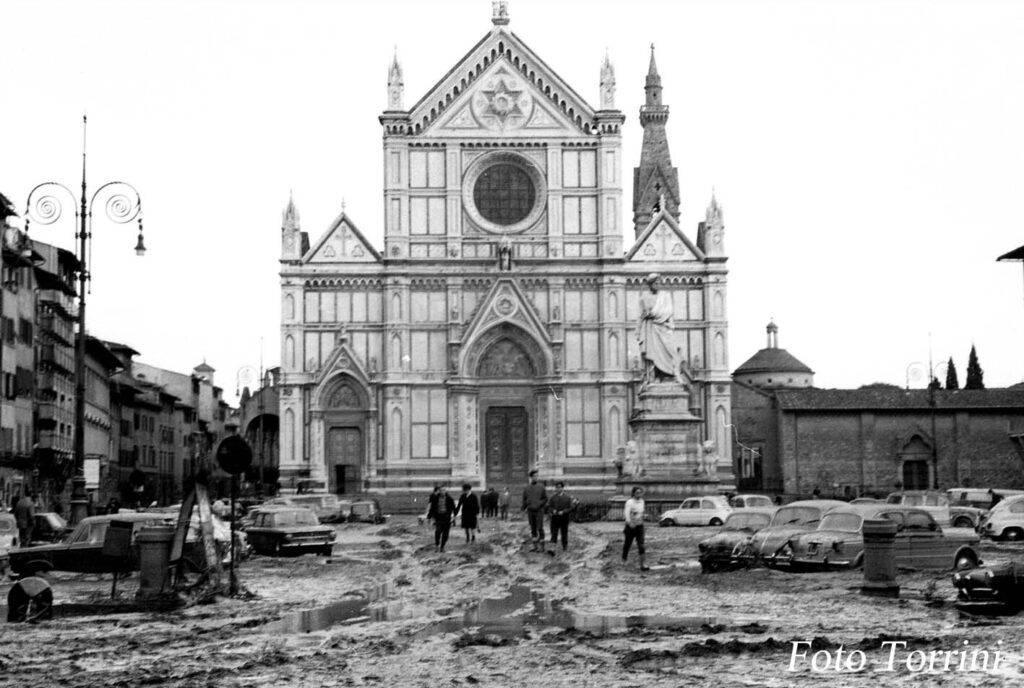
Basilica of Santa Croce before 1966 / Image credit: Torrini Fotogiornalismo Firenze. Used with Permission.
Coming 2026
Enter Her Florence
The Filmmaker
Katherine Diane Schimmel
Writer and Filmmaker
Katherine is a researcher, writer, and musician who is
fascinated by the creative artistic process. Her work
divides between the analytical study of paintings and
projects to those rooted in sound and music, and over
the years she has collaborated with pioneers in both
the sciences and the arts to understand that process
more deeply. She has hosted a popular series at an
award-winning literary magazine and published in
journals, European audio-technical magazines, and
books. A long-time advocate for human rights, animal
and environmental welfare, and the preservation of
cultural heritage, she wrote Dinner with Dante—her
festival-circuit debut—inspired by her own very
different conversations with the monument to Dante.
The Journey
2023
Screenplay completed
Fall 2025
Funding goals reported reached
Now
Post production now completed
2026
Film begins to enter festivals around the world
Where the Story Lives
In some ways, Florence is a character within the film. The Enrico Pazzi monument of Dante—completed in 1865—now stands to the left of the Basilica di Santa Croce, keeping watch over a square that carries centuries of memory and still bears the scars of the great flood of 1966.
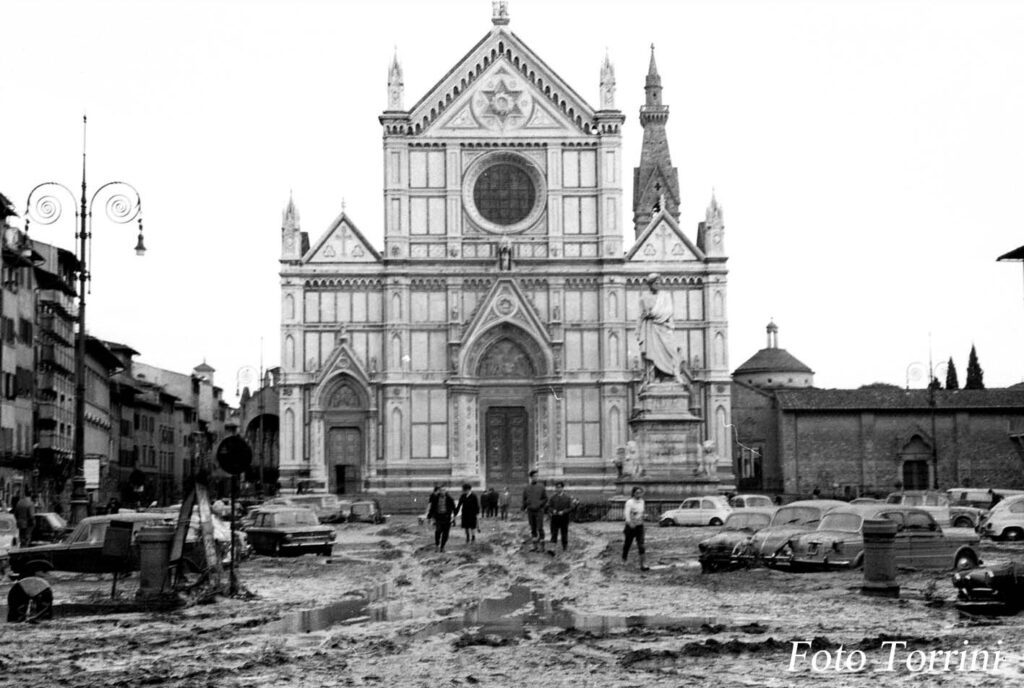
Basilica of Santa Croce, 1966 / Image credit: Torrini Fotogiornalismo Firenze. Used with Permission.
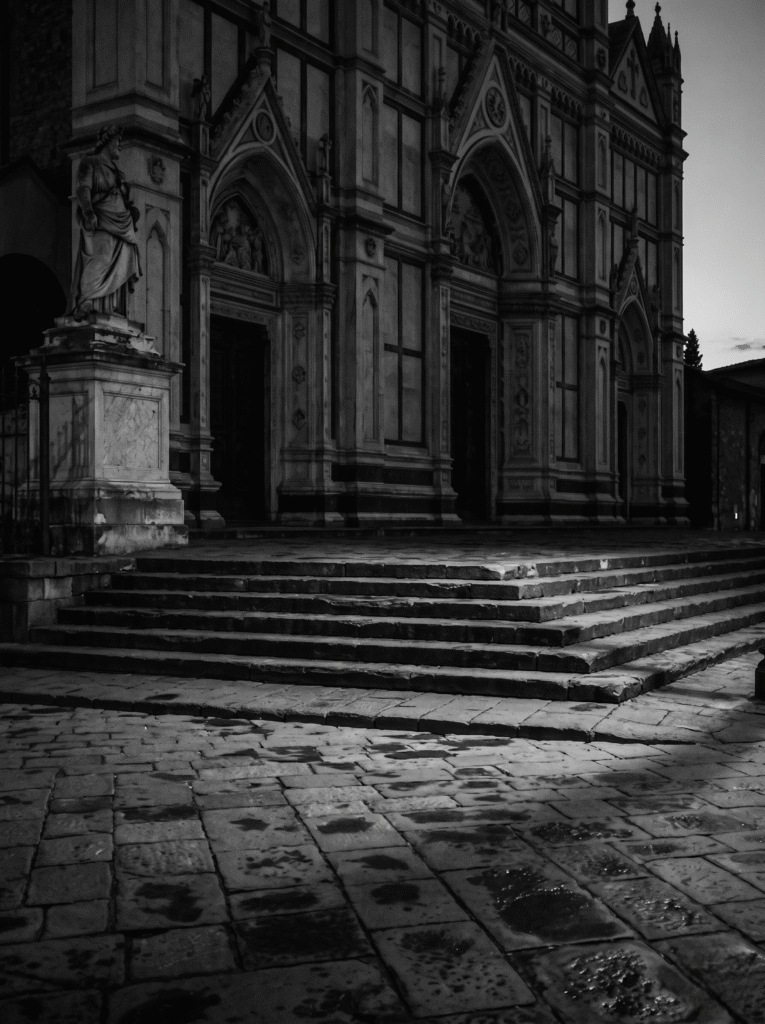
The square, as the film remembers it.
01
New York International Film Awards
Grand Jury · Best Original Script
02
Rome International Movie Awards
Best Original Screenplay
03
8 & Halfilm Awards, Florence
Best Historical Drama · Best Short Script
04
Latitude Film Awards, London
Silver · Best Original Short Screenplay
05
Frida Film Festival
Best International Screenwriter
06
Naples Film Award
Best Short Script
“The narrative plumbs complex emotions and the lifelong attempt to cope with grief and mourning through a meticulous description of emotions, and an educated and sophisticated use of language.”
Rome Prisma Awards
Cultural Legacy
A Story That Remembers
Dinner with Dante is, at heart, an act of remembrance. It
holds the Basilica di Santa Croce and the monument to Dante
not as scenery but as witnesses—the same stones the 1966
flood nearly swept away are cared for now by the Opera di
Santa Croce, which preserves the chapels, artworks, and
funerary monuments of the piazza and basilica.
The screenplay remembers with reverence all those who
were lost or left traumatized during and after both World
Wars. Though the film has no formal connection to the
Commonwealth War Graves Foundation, Katherine hopes to
raise awareness of its outreach—the speakers, guides, and
volunteers who keep those stories alive.
“Only the dead have seen the end of war.”
George Santayana, 1922
Film Updates
Follow the Journey
Screenplay Awards
I am both grateful and humbled by the many awards and selections Dinner with Dante has received from around the world since March 2023! Many thanks to all those who believed in the script and loved the story.
"The greatest travelers have not gone beyond the limits of their own world; they have trodden the paths of their own souls." -Carlo Levi
"Dinner with Dante...is a story of survival, of love, and of the people broken by the horrors of war." -Florence Film Awards
Dinner with Dante.
Witness the story of a lifetime through a WWII widow's conversations with a statue of Dante in Florence!
01.
Funding Inquiries
As of the Fall or 2025, we have reached our fundraising goals for the making of this film. Many thanks to our donors!
02.
Author | Writer
Katherine is a researcher, writer, and musician, who is passionate about art, music, and the creative process. Her projects may be divided into two areas: those that relate to the analytical study of paintings and those that relate to sound and music. Over the years she has collaborated with pioneers in both the sciences and the arts as a way of understanding the artistic process at a much deeper level. She has also hosted a popular series at an award-winning literary magazine and published articles in a variety of journals, technical magazines, and books. She is a long-time advocate for human rights, animal and environmental welfare and the protection and preservation of cultural heritage.
Dinner with Dante was inspired in part by the writer’s own conversations with the statue of Dante and by the stories she’d heard about Florence in the early post WWII years. It is her hope that the film will change someone’s life for the better; perhaps by making them feel less isolated or by giving them hope that comfort can sometimes arrive in the least expected places.
The screenplay marks her debut on the film festival circuit.
03.
Basilica di Santa Croce
The Opera di Santa Croce plays a vital role in preserving and maintaining the many rich and complex layers of history that are represented in the vast artistic, cultural, civil, and religious heritage of the basilica along with its extraordinary chapels, serene inner courtyards, and ancient affiliated buildings.
The Enrico Pazzi monument of Dante Alighieri, which was completed in 1865, and stands today to the left of the basilica, is seen here, in this image, more to the right. As the reader will note, the image of the piazza shown here appears very different from how it appears today. This is because the piazza is shown as it appeared just after the great flood of 1966 and before the monument of Dante was moved. The deluge of water that flowed from the Arno River on November 4th, killed at least 101 people and is responsible for damaging or destroying millions of priceless artworks and rare books; leaving some art restoration scholars to say that the flood of 66’ caused more damage to cultural heritage objects in the city of Florence than both World Wars combined. It was the worst flood the city of Florence had experienced since 1557; and in some ways it has yet to recover from the full scope of the damage.
If you would like to learn more about the Basillica di Santa Croce or learn more about the Opera di Santa Croce and their important work relating to the ongoing historical preservation of this landmark site, please go to their website directly by clicking on the Read More icon below.
Image credit: Torrini Fotogiornalismo Firenze. Used with Permission.
Basilica of Santa Croce, 1966 / Image credit: Torrini Fotogiornalismo Firenze. Used with Permission.